
Thai EV Production Skyrockets by 1,974% as Offset Deadlines Loom
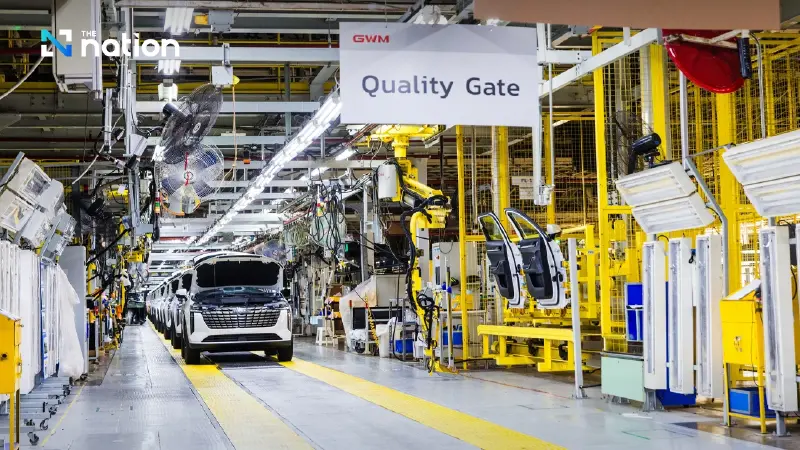


Manufacturers ramp up local assembly to meet EV3.0 requirements, offsetting imports from previous years as total domestic sales climb by 5.28 per cent
- Thailand's electric vehicle (EV) production surged by 1,974% year-on-year in November as manufacturers rushed to meet government deadlines.
- The production boom is driven by the "EV3.0" incentive program, which requires carmakers to produce 1.5 local EVs to offset every one vehicle previously imported tax-free.
- This acceleration in local assembly is happening as domestic sales of battery electric vehicles have also surged, growing by 63.65% compared to the previous year.
Manufacturers ramp up local assembly to meet EV3.0 requirements, offsetting imports from previous years as total domestic sales climb by 5.28 per cent.
Thailand’s electric vehicle (EV) manufacturing sector recorded a staggering 1,974.14 per cent year-on-year increase in production this November, driven by the urgent need for carmakers to meet government-mandated local production quotas.
According to Surapong Paisitpatanapong, spokesperson for the Automotive Industry Group at the Federation of Thai Industries (FTI), total vehicle production for November 2025 reached 130,222 units.
While this figure represents a marginal 4.03 per cent dip from October, it marks an 11.06 per cent increase over the same month last year.
The "EV3.0" Factor The unprecedented surge in EV assembly is directly linked to the government’s "EV3.0" incentive programme. Under this scheme, manufacturers who imported fully built EVs tax-free in 2022 and 2023 are required to compensate by producing 1.5 vehicles locally for every one imported.
"The domestic production spike of 57.49 per cent is a result of companies fulfilling these compensation requirements," Surapong explained. "The backlog of production that was not completed last year has resulted in a massive acceleration this November."

A Shift in the Passenger Market Of the 52,887 passenger cars produced in November, 9,624 units were Battery Electric Vehicles (BEVs).
This represents a transformation of the production floor compared to November 2024, when local EV assembly was still in its infancy.
The broader market data for January to November 2025 shows a resilient domestic sector:
Total Domestic Sales: 546,045 units, up 5.28 per cent year-on-year.
EV Market Share: BEV sales reached 100,553 units, a significant 63.65 per cent increase compared to the previous year.
Passenger Dominance: Passenger cars and SUVs now account for nearly 65 per cent of all sales in Thailand.

Despite the boom in the EV segment, the wider automotive industry faced slight headwinds, with total production for the first 11 months of the year reaching 1,341,714 units—a 1.64 per cent decline compared to the same period in 2024.
Analysts suggest this is due to a slowdown in traditional internal combustion engine (ICE) exports, even as the domestic market pivots rapidly toward electrification.
