
Thailand targets pay-to-fly scheme as new pilots face rising entry costs
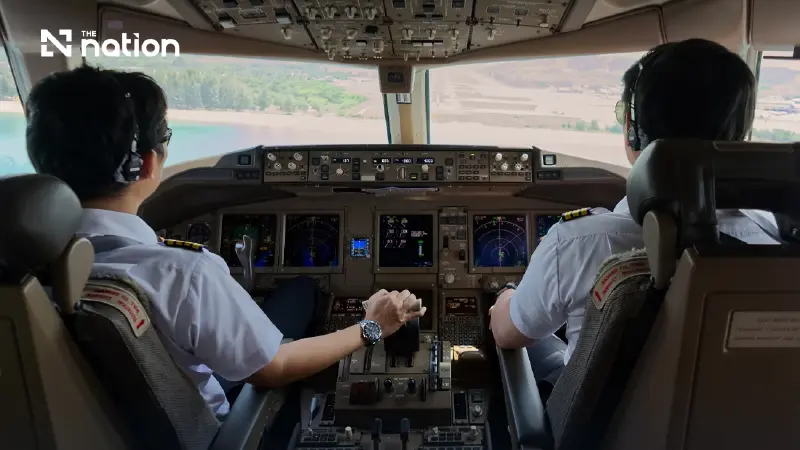


The Transport Ministry and THAIPA are seeking measures to address pilot unemployment and the pay-to-fly model, under which aspiring pilots reportedly pay up to 6 million baht to fly.
- Thailand's government and Pilots Association are addressing the "Pay to Fly" system, which requires aspiring pilots to pay up to 6 million baht for training costs to secure a job.
- The scheme creates a significant financial barrier and has raised concerns about fairness, pilot stress from debt, and potential long-term aviation safety.
- This issue is exacerbated by a large surplus of pilots in Thailand, with over 1,700 unemployed pilots and another 1,200 license holders seeking employment after the COVID-19 crisis.
- Proposed solutions include creating clearer regulations for the system, enforcing stronger employment standards, and better aligning the number of pilot trainees with industry demand.
The Ministry of Transport and the Thai Pilots Association (THAIPA) have held talks on measures to address widespread pilot unemployment and concerns over the “Pay to Fly” system, under which aspiring pilots reportedly have to pay up to 6 million baht for a chance to enter the profession.
The discussions, held on Monday (June 15), focused on structural problems affecting Thai aviation after the Covid-19 crisis, which severely disrupted the industry and left a large number of pilots without work.
Industry figures show that Thailand has 1,736 unemployed Thai pilots, while another 1,219 commercial pilot licence (CPL) holders are waiting for employment. The unused investment in pilot education is estimated at more than 4.3 billion baht.
Key causes include an oversupply of pilots relative to market demand, the employment of foreign pilots in some cases, gaps in specialised labour-protection laws, and the emergence of the Pay to Fly model.
The model has raised concerns because applicants must shoulder high costs in exchange for employment opportunities, affecting fairness and access to the pilot profession.
Clear rules proposed for Pay to Fly system
At the meeting, THAIPA proposed both short- and long-term solutions, including clearer rules to regulate the Pay to Fly system, stronger employment and welfare standards, enforcement of rules on the use of Thai pilots, a complaint channel, and protection for whistleblowers.
The association also called for a system to align pilot training numbers with aviation industry demand through cooperation among all relevant sectors. The aim is to address structural problems, create fairer employment opportunities and support the sustainable development of Thailand’s aviation industry.
Deputy Transport Minister Phattrapong Phattraprasit noted that the ministry places importance on developing aviation personnel while maintaining the highest safety standards.
He added that the ministry was ready to consider proposals from all sectors in order to develop appropriate measures, promote fairness in the pilot profession, reduce inequality in access to aviation careers and strengthen the long-term competitiveness of Thailand’s aviation industry.

What is Pay to Fly and why does it cost 6 million baht?
Under the Pay to Fly model, airlines open pilot recruitment but require those seeking to enter the profession to pay their own training costs. The current average is reportedly around 6 million baht per person, comprising about 3 million baht for commercial pilot licence training and another 3 million baht for type rating, which qualifies pilots to operate a specific aircraft type.
THAIPA said the Pay to Fly model creates a significant financial barrier for capable candidates who lack the resources to enter the industry. While no law directly prohibits the practice, the association argued that it can lead to unfair employment conditions and raise long-term concerns about aviation safety.
According to THAIPA, the issue becomes particularly serious when aspiring pilots are required to take on debt exceeding 6 million baht. The association warned that financial pressure, inadequate income to cover living expenses, or the need to seek additional work or business opportunities could create stress and potentially affect a pilot’s focus during flight operations.
THAIPA noted that this is one reason pilot compensation has traditionally been relatively high. Average pilot earnings in the aviation industry, including salary, flight-operation pay and hourly allowances of around 1,000-2,000 baht per hour, generally range from 100,000-200,000 baht per month.
However, the association said some airlines offer compensation below industry norms, with hourly flight pay reportedly reduced to around 500 baht and total monthly income averaging about 70,000 baht. For pilots who have already invested 6 million baht to enter the profession, THAIPA said such income levels make it extremely difficult to recover their costs.
THAIPA added that some pilots accept the arrangement because they need type-rating qualifications and additional flying hours. After gaining sufficient experience, they may seek employment with airlines offering better compensation. Newly graduated pilots with limited opportunities may also feel compelled to pay in order to pursue the profession for which they have trained.
THAIPA has long urged the government to take the issue seriously before it grows further, stressing that a responsible agency must take the lead in solving the problem.
The association noted that some past models were more acceptable, such as airlines arranging financing for pilots to undergo training before repaying loans to financial institutions.
THAIPA noted that it understood airlines may no longer be able to provide full scholarships for all pilots as they did in the past, particularly amid rising competition in the aviation business.

Co-pilots also asked to pay for captain upgrades
THAIPA also raised concerns over cases in which co-pilots seeking promotion to captain have been required to cover their own upgrade training costs.
The association argues that, under labour principles, airlines should bear the cost of training employees for career progression. However, some airlines reportedly require pilots to pay these costs themselves, with the expense estimated at around 870,000 baht.
THAIPA views this model as potentially risky under labour law. Although promotion to captain must still meet flying-hour requirements, the arrangement could mean that pilots who are ready to pay first are upgraded before others.
