
Thailand Insists US Tariff Talks Must Remain Separate from Border Conflict
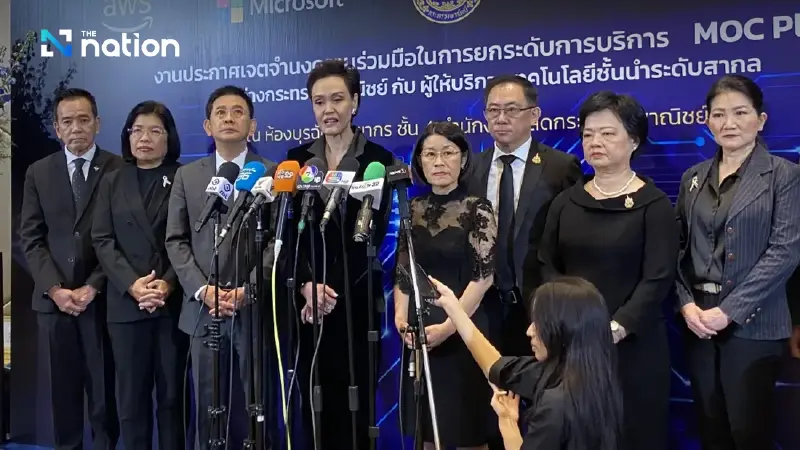


Commerce Minister Suphajee Suthumpun rejects linking trade negotiation delay to Thai-Cambodia crisis, asserting Bangkok acted only to protect sovereignty
- Thailand's Commerce Minister has officially stated that the nation's border conflict with Cambodia must be kept separate from its trade tariff negotiations with the United States.
- The Thai government views the border dispute as a matter of national sovereignty with Cambodia, which is distinct from the economic talks with Washington.
- Thailand rejects any suggestion that the U.S. might use the border situation as leverage in trade talks, asserting its actions in the conflict were defensive.
- While acknowledging the U.S. has the right to connect the two issues, Thailand's firm position is that the matters should not be linked.
Commerce Minister Suphajee Suthumpun rejects linking trade negotiation delay to Thai-Cambodia crisis, asserting Bangkok acted only to protect sovereignty.
Thailand’s Commerce Minister Suphajee Suthumpun has firmly stated on Thursday that the ongoing border tensions with Cambodia should not be allowed to influence trade negotiations with the United States.
Speaking on the status of the tariff negotiations with Washington, Minister Suphajee confirmed that while talks are currently in a detailed phase, Thailand remains keen to proceed through all available channels.
The "Team Thailand" trade mission has formally communicated its intention to continue the discussions.
However, the Minister stressed that any suggestion the US might use the border situation as a leverage point in the trade talks is unwarranted.
"This issue is entirely separate from the situation currently unfolding along the Thai-Cambodia border," Suphajee said. "The border conflict is a matter between Thailand and Cambodia, where Thailand is required to protect its sovereignty and ensure the safety of its citizens."
Minister Suphajee asserted that Thailand did not initiate the conflict and was not the offending party.
"Thailand’s actions were defensive to prevent loss. International countries, including the US, have been informed of this information," she maintained.
She acknowledged that while the US has the right to link the border incident to trade issues if it chooses to do so, Thailand's firm position is that the two matters should not be connected.
The Minister also pushed back against pressure to conclude the trade talks quickly, noting that the delays are not unique to Thailand.
She pointed out that US negotiations with Indonesia, which were targeted for completion by November, remain unfinished, while talks with both Thailand and Vietnam have also seen little recent progress.
Suphajee reiterated Thailand's readiness and sincerity to conclude negotiations by the end of the year if the US is prepared.
She added that if the US is not ready, Thailand suffers no immediate damage, as the current 19% tariff rate remains in place with no indication of impending change.
Regarding potential legal changes in the US, specifically an upcoming Supreme Court ruling on the President's authority to use Executive Orders for implementing reciprocal trade measures, the Minister stated that no special preparation is necessary.
If the Court affirms the President's authority, negotiations will proceed as normal. If the ruling invalidates this authority, the only implication for Thailand would be the standard procedure of recalculating and requesting refunds for tariffs already paid.
