
Japanese fans win hearts by cleaning Dallas Stadium after World Cup draw
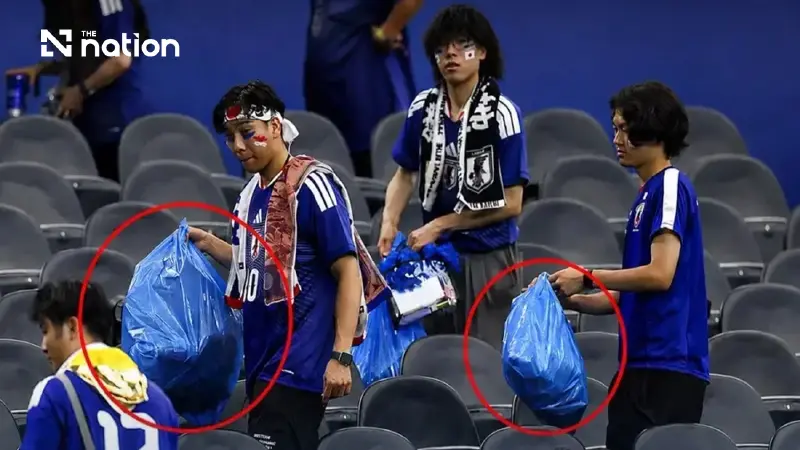


Japanese football fans have once again won admiration on the world stage after staying behind to clean Dallas Stadium following Japan’s 2-2 draw with the Netherlands at the FIFA World Cup 2026.
FIFA and major US media outlets including CNN and CBS News drew attention to the fans’ post-match conduct, as many spectators left the stadium while Japanese supporters reached for rubbish bags and began collecting litter from the stands.
Viral images showed hundreds of Japanese fans walking along rows of seats, holding rubbish bags in one hand while picking up cups, snack wrappers and other discarded items with the other. Their actions left parts of the stadium cleaner than when they had arrived.
Japan’s men’s team also made an impression off the pitch, leaving the dressing room at Dallas Stadium spotless after the match. Fox 4 reported that chairs were stacked, rubbish was collected and towels were neatly folded, while no one had asked the team to do so.
Nina Shimaguchi of the Japan-America Society of Dallas-Fort Worth told CBS News Texas that the behaviour did not surprise her. She said cleaning up was a natural habit for many Japanese people, and that cleanliness is seen as a sign of respect.

Culture linked to Shinto beliefs
Shimaguchi explained that in Japan’s education system, children are taught from a young age to look after shared spaces. From elementary school to high school, students commonly help clean classrooms, corridors and toilets themselves.
For many Japanese people, however, the practice goes beyond simple tidiness. Shimaguchi said it is also connected to Shinto beliefs and the idea that everyday objects carry meaning. She noted that Shinto, rooted in Japan, recognises a spirit in natural things such as trees and stones, and that this sense of respect extends into daily life.
Japanese players and supporters have impressed both on and off the field. A simple act of cleaning up has sparked wide admiration and a broader conversation about culture, curiosity and kindness.
Shimaguchi said many people watching the World Cup may now see the act as part of Japanese culture, encouraging them to learn more and understand the values behind it.

Respect for place and shared responsibility
The conduct of Japanese fans reflects deeply rooted cultural values of cleanliness, cooperation and shared responsibility, which are taught from childhood. It also shows a sense of gratitude towards the stadium, the host country and the game itself.
The practice is often associated with the Japanese spirit of hospitality, or omotenashi, which seeks to leave a lasting positive impression on others.
The tradition first drew widespread global attention during the 1998 World Cup in France, and has since appeared repeatedly at World Cups and major sporting events. People reported that Japanese fans’ tradition of picking up rubbish after World Cup matches dates back to 1998.
The practice has also inspired others. At this World Cup, New York Giants quarterback Jameis Winston, working as a Fox Sports correspondent, was seen helping Japanese fans collect rubbish after the match, according to People.
Videos of Japanese fans carefully collecting rubbish after matches have continued to spread around the world, earning praise from football bodies, international media and supporters of other nations.
For Japan’s fans, the gesture is more than a post-match routine. It is a quiet expression of respect — for the game, for the host venue and for the people who come after them.

