
USDA confirms bird flu case in Wisconsin dairy herd as new wildlife spillover
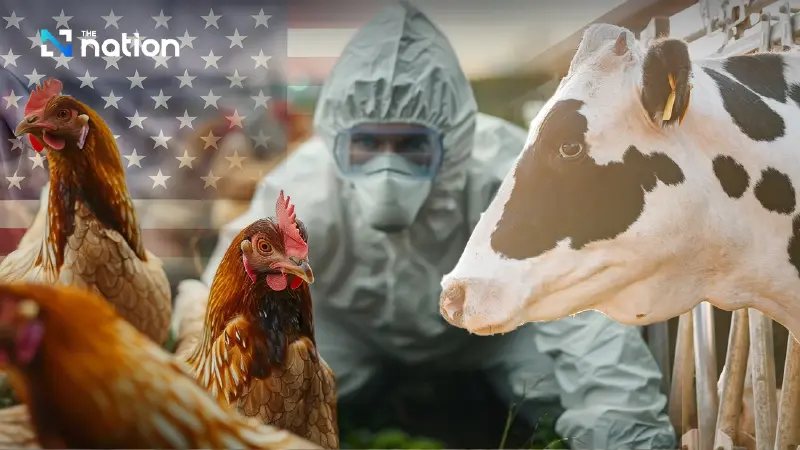


The US Department of Agriculture (USDA )has confirmed a fresh case of highly pathogenic bird flu in a dairy herd in Wisconsin, saying it appears to be a new “spillover” from wildlife into cattle rather than part of earlier dairy outbreaks.
- The USDA has confirmed a case of H5N1 bird flu in a Wisconsin dairy herd.
- Genetic sequencing shows this is a new wildlife spillover event, as the virus strain is different from the one linked to the main US cattle outbreak that began in Texas.
- The infection was detected through national milk testing and has not spread to other herds.
- Officials reassure that the commercial milk supply is safe due to pasteurization and the risk to the general public remains low.
USDA said laboratory genome sequencing confirmed the virus as H5N1 clade 2.3.4.4b genotype D1.1, based on testing completed on December 17. Most detections in US dairy cattle so far have been tied to animal movements linked to an initial spillover event in Texas in late 2023, involving a different strain, B3.13.
Officials said the Wisconsin detection, found through the agency’s National Milk Testing Strategy, has not triggered further infections in other herds.
USDA stressed there is no threat to consumers or the commercial milk supply because pasteurisation inactivates the virus, and milk from affected animals is kept out of the food chain.
The Centres for Disease Control and Prevention continues to assess the risk to the general public as low.
USDA has urged dairy operators to keep biosecurity tight and to report livestock showing suspicious symptoms, as well as unusual wildlife die-offs.
Separately, a bipartisan group of US senators has called on President Donald Trump’s administration to complete a science-based plan for developing a bird flu vaccine for livestock.
Reuters
