
Thai Cabinet notes neutral ENSO before El Niño, sets 9 water measures
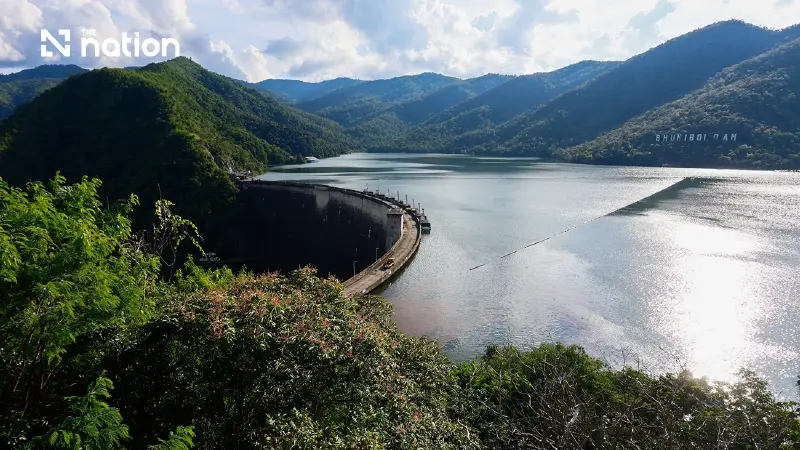


EEC reservoir levels were reported at 39-52%, as the Cabinet acknowledged nine measures to prepare for heavy rain, floods, runoff, landslides and dry spells in 2026.
- The Thai Cabinet has acknowledged that the current neutral ENSO (El Niño-Southern Oscillation) phase is expected to transition into an El Niño event, increasing the risk of future drought.
- In response, the government has approved a set of nine key measures to manage water resources during the rainy season and prepare for potential floods, landslides, and dry spells.
- The measures focus on improving forecasting and warning systems, preparing equipment and personnel, inspecting dam safety, and enhancing drainage efficiency to mitigate flooding.
- A key part of the plan is to accelerate water retention and storage towards the end of the rainy season to create reserves for the anticipated dry conditions associated with El Niño.
Water levels in the Eastern Economic Corridor (EEC) area were reported as follows: Bang Phra Reservoir at 45 million cubic metres, or 39%; Nong Pla Lai Reservoir at 81 million cubic metres, or 50%; and Prasae Reservoir at 155 million cubic metres, or 52%.
For the three-day accumulated heavy-rain risk forecast from June 10 to 12, areas expected to receive more than 200mm of rain (the 10 highest-ranked areas) are Rayong province (Ban Khai, Wang Chan, Pluak Daeng and Mueang Rayong districts), Chanthaburi province (Makham and Khao Khitchakut districts), and Trat province (Mueang Trat and Khlong Yai districts).
Thailand enters the rainy season from May 1 to October 31 each year, except for the east coast of the South, where it begins on September 1 and ends on February 28 of the following year.

Lalida Perisvivatana, deputy government spokesperson, said the Cabinet had acknowledged 2026 rainy-season response measures proposed by the National Water Resources Committee (NWRC).
It assigned relevant agencies to strictly implement the measures and report the results to the NWRC for continuous monitoring and evaluation, in preparation for heavy rain, flooding, runoff, landslides and dry spells that may occur in many areas of the country.

The government has integrated the work of all agencies under nine key measures to prevent and reduce impacts on the public:
- Forecast, identify and warn risk areas by improving the efficiency of rainfall and water-situation forecasting, preparing maps of areas at risk of flooding, landslides and dry spells, and developing warning systems so they reach the public more quickly and accurately.
- Review and improve water-management criteria across entire river basins so they correspond with actual conditions, link data between agencies and prepare water-management plans for crises in advance.
- Prepare machinery, equipment, hydraulic structures, drainage systems and personnel for 24-hour readiness, as well as surveying, repairing and removing obstructions in waterways to improve drainage efficiency.
- Inspect the safety and stability of embankments, dams, weirs and floodwalls, and prepare back-up plans and response plans in case damage occurs or sudden runoff takes place.
- Improve drainage efficiency systematically by accelerating the removal of water hyacinth and floating weeds and dredging drainage routes, so water can drain quickly, especially in key economic areas and vulnerable areas.
- Establish water-management centres before disasters occur, rehearse response plans, prepare shelters, evacuation areas and essential supplies, and provide care for vulnerable groups and move livestock in at-risk areas.
- Accelerate water retention and water-source development towards the end of the rainy season, to store water reserves for use in the dry season by managing reservoirs, surface-water sources and groundwater to their full potential.
- Build awareness of risk and strengthen public networks so they take part in surveillance, warnings and monitoring of the water situation, while disseminating accurate information and promptly clarifying false news.
- Monitor, evaluate and adjust measures in line with the situation, with the Office of the National Water Resources and river basin committees, to continuously monitor, analyse and summarise operations throughout the rainy season.
“The 2026 measures have been improved from the previous year, with greater emphasis on area-based data and advanced risk management, including monitoring vulnerable areas such as hospitals, elderly care homes and at-risk communities, linking data between agencies, establishing advanced risk monitoring points and preparing systematic post-disaster recovery plans.”
However, data from the Ministry of Agriculture and Cooperatives stated that, based on monitoring of the water situation and preparations for the 2026 rainy season, together with forecasts that ENSO is currently in a neutral phase and that El Niño is likely to develop in mid-2026 and continue into early 2027, the risk of low rainfall, dry spells and drought would increase in the next phase.
Accordingly, detailed water-management measures have been set out as follows:
- Monitoring and forecasting the water situation, with importance attached to flood and drought prevention, support for the agricultural sector and care for the public. This includes continuous monitoring of water and weather conditions using data and forecasts from the Thai Meteorological Department, the Hydro-Informatics Institute (Public Organisation) (HII) and the Office of the National Water Resources (ONWR), preparing scenarios for both mild and severe El Niño cases, and setting Trigger Points for adjusting water-management plans every month so operations can be adapted in time to the situation.
- Storing and reserving initial water supplies. Reservoir-management criteria, or the Rule Curve, will be reviewed to align with the El Niño trend, with water to be stored as much as possible towards the end of the rainy season within dam safety limits, while reserving enough initial water for domestic use and consumption and ecosystem maintenance through to the next dry season.
- Accelerating water-source development and improving irrigation-system efficiency. Water-source development projects at all stages, including study, design and construction, will be accelerated in line with work plans and timeframes, alongside increasing storage capacity, developing retention areas and floodwater storage basins, and improving the efficiency of water delivery and distribution in irrigation systems to increase water capacity in line with demand in each area.
- Preparing for floodwater. Obstructions in waterways will be removed, canals dredged, and drainage efficiency improved in at-risk areas, while machinery, water pumps and personnel will be prepared so they can be moved immediately to help the public both inside and outside irrigation areas, with close monitoring of repeatedly flooded areas.
- Fair and comprehensive water allocation. Water will be allocated according to priorities: domestic use and consumption, ecosystem maintenance, agriculture and industry, in a fair manner and in line with the needs of each area. Crop planning will also be carried out with farmers, while low-water-use crops will be promoted in areas at risk of water shortages.
- Adapting to climate change. A long-term water-security plan will be prepared to cope with climate variability, focusing on linking water networks and inter-basin water diversion, or the Water Grid, and designing irrigation infrastructure to withstand extreme weather. The development of small-scale water sources and water-distribution systems at the farm and community level will be integrated with the Land Development Department and directly responsible agencies, based primarily on academic principles and engineering suitability.
- Integration and communication with the public. Work will be integrated with the Department of Disaster Prevention and Mitigation, local administrative organisations and agencies in local areas, while information on the water situation and warnings will be communicated continuously to farmers and the public so they can plan water use and prepare in advance.
Although the country is at a turning point between the rainy season and El Niño conditions, it cannot be assumed that the water situation will not affect people’s livelihoods or the overall economy.
Under current weather conditions, drought can be severe and rainfall can be heavy, making good management planning essential.
