
Thailand urged to put nature on national balance sheet for green growth
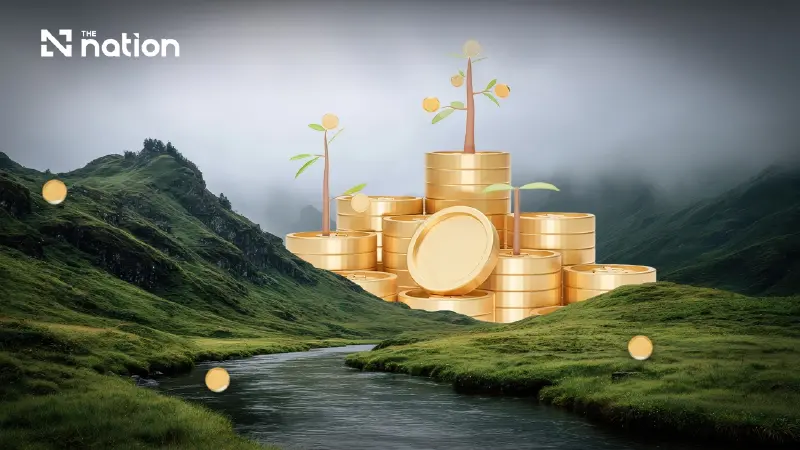


The World Bank Group and NESDC say natural capital accounting can help Thailand balance economic growth, investment and environmental protection.
- The World Bank is urging Thailand to adopt Natural Capital Accounting (NCA) to formally measure and integrate the economic value of its natural assets, such as forests and watersheds, into national accounts.
- This framework aims to make the "invisible" economic contributions of nature—like flood control, water regulation, and support for tourism—visible to policymakers, helping them balance growth with environmental protection.
- By putting nature on its balance sheet, Thailand can identify new "green growth" opportunities in sectors where it has a competitive advantage, including sustainable agriculture, eco-tourism, and biotechnology.
- The goal is to ensure that current economic activity does not deplete the natural asset base needed for future growth, framing environmental conservation as an economic necessity for long-term prosperity.
The World Bank Group is supporting Thailand’s use of natural capital accounting (NCA) as a tool to help policymakers balance economic growth with environmental protection.
NCA measures the stocks and flows of natural assets and translates them into data that can be used alongside existing national accounting systems.
By accounting for resources such as water, land, forests and energy, as well as environmental impacts including air pollution, the framework can help governments make better decisions on development, investment and conservation.
Speaking at Earth Jump 2026: A Bridge to Empowered Actions, Melinda Good, World Bank Country Director for Thailand and Myanmar in the East Asia and Pacific Region, described Thailand’s forests, watersheds and resilient landscapes as key assets for future growth.
“When we think about natural capital, it is about Thailand’s wonderful resources — forests, watersheds, resilient landscapes. These are the foundation for growth, resilience, productivity and competitiveness,” Good told the forum.
She explained that investing in these assets creates economic value because they help regulate water, manage floods and droughts, cool cities, and support agriculture and tourism. However, such benefits have traditionally remained “invisible” in economic decision-making.
“NCA is about bringing them onto the balance sheet and making the invisible visible,” she noted.
Natural capital and future growth
Good stressed that NCA was not intended to replace gross domestic product (GDP), which remains an important measure of current production. Instead, it helps show whether today’s economic activity is strengthening or depleting the asset base needed to support future growth.
The framework also provides a way to measure ecosystem services and link them to decisions on where public and private investment should be directed.
At the World Bank, she explained, this approach is part of “wealth accounting”, which encourages countries to consider all major assets, including productive capital, human capital, natural capital and financial assets.
If managed properly, short-term economic expansion should not come at the expense of these assets, as their degradation can quickly lead to higher public spending, inflation, fiscal risk and weaker long-term growth.
Good highlighted the scale of the issue, noting that more than half of global GDP, or about US$60 trillion, is generated in sectors that depend on nature. World Bank analysis suggests that even a partial collapse of ecosystem services could cut global GDP by US$2.7 trillion by 2030.
World Bank programme supports natural capital data
Good pointed to the World Bank’s Global Program on Sustainability (GPS), which helps countries move from measuring natural assets, such as watersheds, to translating those values into figures that can be reflected in national plans.
The programme has worked with resource-rich countries in Latin America and Africa. In Costa Rica, for example, a sustainable tourism economy has been supported through a “payment for ecosystem services” programme, which turns the value of forests into a mechanism to compensate landowners for conservation or restoration.
Good also referred to early-stage work on NCA in Thailand’s Nan Province, where private programmes are working with communities that understand the connection between forests, watersheds and livelihoods.
“What happens upstream in a watershed like Nan affects everything downstream through the river into the Chao Phraya Basin,” she explained, adding that about two-thirds of Thailand’s GDP is generated in the Chao Phraya Basin, making it a crucial ecosystem for the country’s future growth.
Good added that the World Bank is supporting the National Economic and Social Development Council (NESDC) and private-sector partners on work that has identified several “industries of the future” where natural capital can give Thailand a competitive advantage, including agribusiness, health and wellness, eco-tourism and advanced manufacturing.
“NCA should lead to smarter development choices. It helps governments identify where nature-based solutions — like watershed restoration, coastal erosion control, sustainable agriculture and green urban infrastructure — can deliver real economic value,” she stated.
This is especially important at a time when Thailand, like many countries, is facing heavy fiscal pressure from global and domestic events, Good added.
Nature as an economic foundation
Speaking at the 8th Global Policy Forum on Natural Capital, Arnunchanog Sakondhavat, director of the NESDC, observed that economic growth and environmental conservation had long been viewed as competing objectives.
For many decades, development was measured mainly by production and consumption, while the value of ecosystems and natural resources remained largely invisible in the economic system.
“Today, the perspective is changing. We are beginning to recognise a simple but profound reality: nature is not external to the economy, it is the foundation. The challenge is therefore not merely to protect nature but to integrate nature into the way we make decisions,” she remarked.
Arnunchanog said Thailand reflects this transition, with sustainability increasingly understood not only as an ecological issue but also as an economic necessity.
She noted that natural resources and environmental sustainability are priorities under Thailand’s long-term national strategy and five-year national plan, while effective resource management is seen as a key factor in improving productivity, competitiveness and sustainable growth.
“Nature should not simply be viewed as something we extract from, it should be viewed as a source of innovation, knowledge and new economic opportunities,” she added.
Four opportunities for Thailand
Arnunchanog identified four major areas where natural capital could become a driver of growth as the global economy shifts towards sustainability.
The first is sustainable agriculture and food security. Thailand is already one of the world’s leading food producers and exporters, but climate change, water scarcity and land degradation are creating growing challenges for agricultural productivity.
Future competitiveness will depend on producing more with fewer resources through precision agriculture, biodiversity-friendly production and climate-smart technologies.
The second opportunity lies in the bio-economy and biotechnology sectors, where Thailand’s biological diversity provides a valuable platform for innovation, including in advanced manufacturing.
The third is sustainable tourism and nature-based experiences. Tourism remains a cornerstone of the Thai economy, but its future will increasingly depend on environmental quality and ecosystem integrity as travellers become more conscious of sustainability and authenticity.
The fourth, and potentially most transformative, is nature-based solutions and ecosystem service markets. Thailand’s forests, mangroves and coastal ecosystems have significant potential to support climate mitigation while creating new sources of income and investment.
Policy action needed to support transition
Arnunchanog said Thailand would need coordinated action across several policy areas to support this transition.
The first priority is stronger national climate targets, including a commitment to reduce net greenhouse gas emissions by 47% from 2019 levels by 2035.
The second is accelerating the shift towards renewable energy and low-carbon technologies. Thailand’s long-term strategy projects renewable energy supplying around 74% of total energy by 2050.
The third is strengthening sustainable transport and energy-efficiency initiatives across all sectors.
The fourth is developing carbon-pricing mechanisms to encourage emissions reductions, alongside accelerating the registration process for the Climate Change Act as a comprehensive legal framework for climate governance.
The final priority is supporting industrial decarbonisation and green financing, including green bonds, sustainability-linked finance, biodiversity credits, carbon markets and innovative public-private partnerships.
“The objective is clear: to ensure that protecting nature is not only environmentally responsible but also economically rewarding,” Arnunchanog said.
“Yet, achieving such ambitious net-zero emission goals requires more than good intentions. It requires better measurement.”
She added that traditional economic indicators remain important but do not fully capture the value of ecosystems or the cost of environmental degradation. NCA can help bridge this gap by making nature visible within economic systems and integrating it into national planning and decision-making.
Arnunchanog concluded that the transition towards a nature-positive economy is one of the defining challenges of this generation.
“What we need now is implementation. We need to move from awareness to action, from measurement to investment, and from insight to impact,” she said.
Thailand’s commitment to conservation and climate action provides a strong foundation, but the journey ahead will require cooperation across government, businesses, financial institutions, researchers and local communities.
By aligning policy, finance and innovation with the value of nature, Thailand can protect ecosystems for future generations while building a stronger economy and more prosperous society, she concluded.
