
Royal Mourning: Queen Mother's Urn Enshrined in Grand Palace Masterpiece
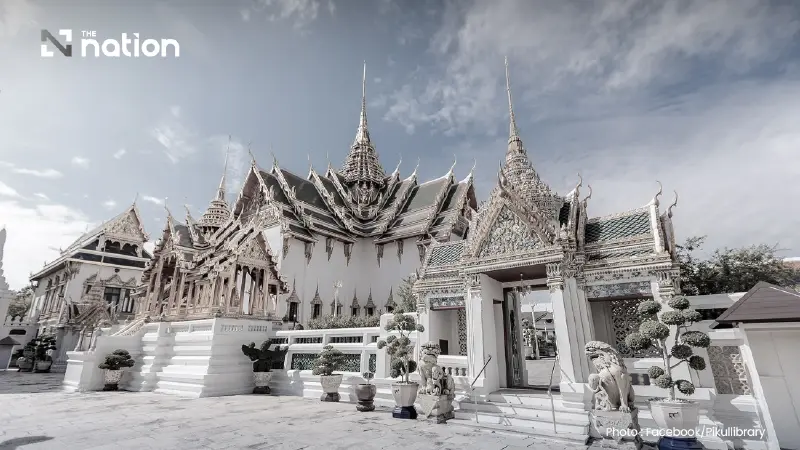


Thailand’s highest-ranking royal funeral rites for Her Majesty Queen Sirikit The Queen Mother begin as her Royal Urn is placed in the Dusit Maha Prasat Throne Hall, a sacred site reserved for monarchs
- The Royal Urn of Her Majesty Queen Sirikit The Queen Mother has been enshrined in the Dusit Maha Prasat Throne Hall within the Grand Palace.
- This enshrinement marks the beginning of the highest-ranking royal funeral rites, conducted in strict adherence to Thai court tradition.
- The Throne Hall is a sacred venue historically reserved for monarchs and is considered a "Masterpiece of Rattanakosin Architecture" in the pure traditional Thai style.
Thailand’s highest-ranking royal funeral rites for Her Majesty Queen Sirikit The Queen Mother begins as her Royal Urn is placed in the Dusit Maha Prasat Throne Hall, a sacred site reserved for monarchs.
The Royal Household Bureau, under the command of His Majesty the King, has announced that the Royal Urn of Her Majesty Queen Sirikit The Queen Mother is now enshrined at the Dusit Maha Prasat Throne Hall within the Grand Palace.
The enshrinement marks the start of funeral rites conducted with the highest royal honours and in strict adherence to Thai court tradition (Rajapradeenee).
The Dusit Maha Prasat is the kingdom's most sacred venue for royal funerals, historically reserved for the Royal Urns of reigning monarchs and specially designated high-ranking members of the Royal Family.
The Throne Hall is not only a site of profound grief but also a national architectural treasure.
It is regarded as the "Masterpiece of Rattanakosin Architecture" and stands as the only existing palace structure in the Grand Palace built in the pure traditional Thai style.
Commissioned by King Rama I the Great in 1789, the hall replaced an earlier structure destroyed by fire. The King intended it to serve as the centre for royal ceremonies and state affairs.
Architecturally, the building features the distinctive quadrilateral Jaturamuk style with a tiered spire roof.

Its facade is adorned with traditional Thai art, including the prominent carving of Lord Narayana (Vishnu) riding the Garuda on its pediment—a powerful symbol of the King’s authority.
The tradition of using the Dusit Maha Prasat for royal funerals dates back to the reign of King Rama I, making the current enshrinement a deeply symbolic event.
It has served as the final resting place for the Royal Urns of almost every monarch of the current Chakri dynasty, as well as those specially honoured by the King.

Most recently, it hosted the Royal Urn of His Majesty King Bhumibol Adulyadej The Great from 2016–2017.
Other royals honoured there include the King’s grandmother, Her Royal Highness Princess Srinagarindra The Princess Mother, and his aunts, Princess Galyani Vadhana and Princess Bejaratana Rajasuda.
Beyond its role in mourning, the Throne Hall is also crucial for major ceremonial events, including the annual Coronation Day ceremonies every May 4th.
The Dusit Maha Prasat Throne Hall is thus more than a historical building; it is a powerful symbol of royal devotion, loyalty, and the unbroken history of the Thai Kingdom.
