
Thailand takes action: Global talks on combating scammers – Cambodia absent from meeting
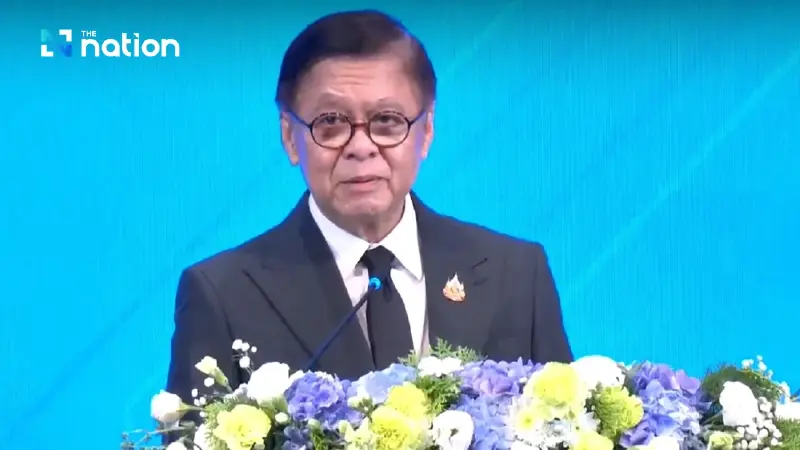


Thailand hosts the International Coalition Against Online Scams meeting, stressing global cooperation to fight cybercrime. Cambodia skips the event.

Thailand steps up its efforts in the global fight against online scammers as Foreign Minister Sihasak Phuangketkeow opens the International Coalition Against Online Scams (IC-GPOS) meeting.
The event, which took place from December 17 to 18, 2025, was hosted by Thailand and attracted over 300 participants from 58 countries, including ministers and deputy ministers from countries like Rwanda, Myanmar, Indonesia, India, China, South Sudan, Vietnam, Laos, and Sri Lanka, as well as representatives from the European Union, five international organizations, and civil society groups. However, Cambodia did not send a representative to the meeting.
Minister Sihasak highlighted that the rise of online scams, fueled by advances in technology, is a global issue that cannot be tackled by any one country alone. He emphasized Thailand’s role in rescuing over 10,000 people from more than 40 countries, many of whom had been victims of call center scams operated by criminal networks in neighboring countries. Thailand’s focus now is on enhancing international cooperation to swiftly protect victims, investigate crime networks, and prevent new victims from falling into these traps. Strong legal enforcement and collaboration across all sectors of society are necessary to effectively combat these crimes. In recent months, Thailand has also seized nearly $300 million in assets linked to online fraud.
Sihasak expressed pride in Thailand's active involvement in the UN Convention Against Cybercrime and its efforts to create a global partnership to combat online scams. He stressed that individual efforts are insufficient to bring down the large-scale criminal networks behind these crimes, often referred to as the “big fish.” These networks continue to evade capture without the proper mechanisms for intelligence sharing and coordinated international action.
The meeting’s primary objective, according to Sihasak, was not to create redundant forums but to focus on tangible action. He emphasized that the conference provided an opportunity for countries with shared concerns, international organizations, the private sector, and civil society to collaborate and move from discussion to action. Thailand hopes that the meeting will result in a Bangkok Joint Statement that demonstrates a strong political will to tackle online fraud. This initiative is a step toward creating a global partnership that goes beyond good intentions and focuses on achieving concrete results.
Sihasak also expressed regret that Cambodia did not attend the meeting, though he emphasized that the issue is not about targeting any single country. He acknowledged that every nation faces challenges with cybercrime, and Thailand hopes that Cambodia will join future efforts to combat this global threat. Despite Cambodia’s absence, Thailand remains optimistic that the international community, including Cambodia, will understand the importance of this issue and join in the collective effort.
Regarding China’s role, Sihasak expressed appreciation for China’s commitment to fighting transnational crimes, including online scams, and noted that Liu Zhongyi, China’s Assistant Minister of Public Security, has played a vital role in this effort, even though they have not yet met in person.
The conference concluded with a Bangkok Joint Statement, outlining the various dimensions of the issue and the ways in which each country will contribute to tackling the problem. There are also plans for establishing communication centers and joint working groups to facilitate information exchange. The outcomes of this meeting are expected to influence future actions at the UN conference on this issue in Vienna, Austria, in 2026.
Sihasak stated that Thailand is committed to continuing its leadership in organizing discussions and coordinating international efforts to combat online scams, recognizing the need for global cooperation to protect citizens and ensure that technology advances in a way that benefits society as a whole.
