
Thai FTA export use tops US$67.9bn in 9 months, led by ASEAN and China deals
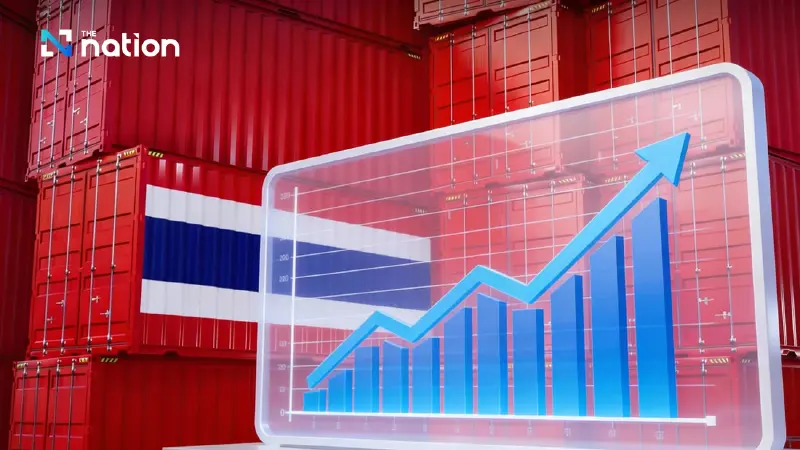


Use of FTA privileges surged in the first nine months of 2025, with utilisation value exceeding US$67.93 billion (more than 2.1 trillion baht), up 6.97% year on year
The top five agreements where Thai exporters used preferential benefits the most were ATIGA (ASEAN), ACFTA (ASEAN–China), AIFTA (ASEAN–India), JTEPA (Thailand–Japan) and TAFTA (Thailand–Australia).
The leading products using FTA privileges spanned both industry—such as commercial vehicles—and agriculture, including fresh durians and prepared chicken.

Arada Fuangtong, Director-General of the Department of Foreign Trade, said Thailand’s utilisation of trade preferences under FTAs continued to expand in the first nine months of 2025, reaching US$67,931.01 million, a 6.97% increase from the same period last year.
Overall, the utilisation rate stood at 81.54% of the value of exports eligible for preferential treatment under FTAs. Exports to ASEAN under the ASEAN Trade in Goods Agreement (ATIGA) ranked first, with a utilisation value of US$24,001.86 million and a utilisation rate of 69.68%.
Second: ASEAN–China Free Trade Agreement (ACFTA), US$19,653.11 million, utilisation rate 96.68%
Third: ASEAN–India Free Trade Agreement (AIFTA), US$7,580.49 million, utilisation rate 73.77%
Fourth: Japan–Thailand Economic Partnership Agreement (JTEPA), US$5,171.76 million, utilisation rate 83.57%
Fifth: Thailand–Australia Free Trade Agreement (TAFTA), US$4,125.65 million, utilisation rate 55.99%
Overall, the top five products with the highest FTA utilisation were:
- commercial vehicles (for the transport of goods)
- fresh durians
- synthetic rubber blended with natural rubber
- unwrought platinum
- prepared chicken
Arada said China remains a key strategic market for agricultural products such as durians and cassava, while India has seen standout growth driven by gems and platinum, creating opportunities for Thai producers—especially in platinum and other precious metals—to benefit from FTAs.
For January–September 2025, the products with high utilisation can be grouped into agriculture/agro-processing and industrial goods.
Top five agriculture and agro-processed products
- durians
- prepared chicken
- frozen meat and other edible parts of poultry
- sugar derived from cane
- fresh fruit (rambutan, longan and fresh pomegranate)
The combined value totalled US$19,635.85 million, accounting for 28.91% of total FTA utilisation.
Arada said durians continue to hold a strong position in the China market, while chicken exports have grown in line with demand in China and Japan, reflecting confidence in Thailand’s food production standards. She added that the automotive sector remains a key driver for Thailand, supported by the country’s domestic manufacturing base.
Top five industrial products
- commercial vehicles (for the transport of goods)
- synthetic rubber blended with natural rubber
- unwrought platinum
- automatic machinery
- window- or wall-type air conditioners
The combined value totalled US$48,295.16 million, accounting for 71.09% of total FTA utilisation.
Arada said the growth in Thailand’s FTA utilisation is a positive signal for exports and reflects Thailand’s increasingly important role in global production chains. FTAs, she said, are a key tool for strengthening competitiveness for Thai businesses, especially SMEs, and can help position Thailand at the forefront of the regional economy over the long term.
She added that new FTAs currently being fast-tracked—particularly Thailand–European Union and Thailand–South Korea—are expected to be major drivers for opening up “premium” global markets and reaching consumers with high purchasing power and strong expectations on quality, standards and product safety.
“The department is also continuing proactive work nationwide through seminars and practical training to strengthen businesses’ understanding of how to use FTA privileges—from rules of origin and certificates of origin, to updates on new FTAs,” Arada said.
For fiscal year 2026, the department has set a target to build capacity for at least 1,300 entrepreneurs, especially SMEs.
Those interested can follow seminar information via the Department of Foreign Trade’s website, or contact the Trade Privileges Division at the Department of Foreign Trade, Ministry of Commerce, or call the hotline 1385.
