
Thailand’s Trillion Infrastructure Pipeline Frozen as Caretaker Government Takes Over
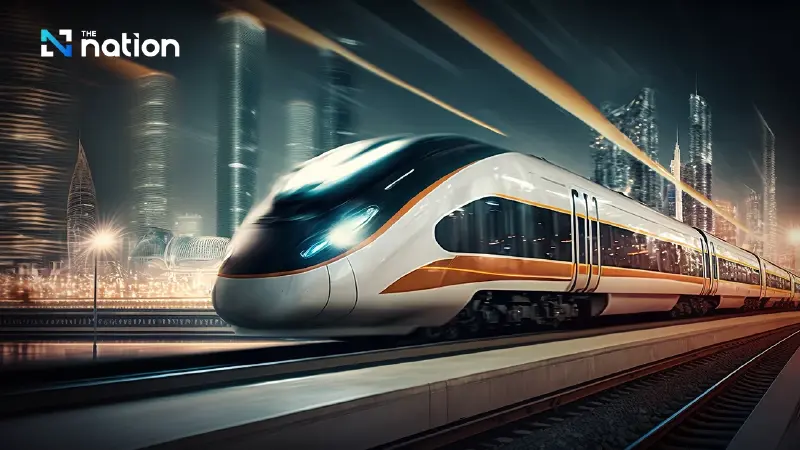


Mega-projects worth 1.4 trillion baht face indefinite delays following the dissolution of Parliament, leaving critical rail, energy, and water schemes in limbo
- Over 1.4 trillion baht in Thai infrastructure projects are frozen due to the dissolution of Parliament, as the caretaker government is legally prohibited from approving large-scale spending.
- The transport sector is the most affected, with over 603 billion baht in projects stalled, including a high-speed rail link between three airports and a major double-track rail expansion.
- The freeze also impacts numerous other sectors, halting major water management and flood prevention schemes, green energy initiatives, airport expansions, and the ratification of new free trade agreements.
Mega-projects worth 1.4 trillion baht face indefinite delays following the dissolution of Parliament, leaving critical rail, energy, and water schemes in limbo.
Thailand’s ambitious infrastructure roadmap has been plunged into uncertainty following the dissolution of Parliament, with investment projects worth over 1.4 trillion baht now effectively frozen.
According to data compiled by Thansettakij, the transition to a caretaker administration, currently led by Anutin Charnvirakul, has triggered strict legal "handcuffs."
Under Election Commission guidelines, a caretaker government is prohibited from approving large-scale spending or policies that bind the next administration.
With a general election now set for 8 February 2026, the nation's economic engines have been throttled back to "maintenance mode."
Transport: The 600-Billion-Baht Gridlock
The Ministry of Transport is the hardest hit, with nine major projects worth a combined 603.4 billion baht stalled.
At the top of the list is the 224-billion-baht High-Speed Rail linking Don Mueang, Suvarnabhumi, and U-Tapao airports. The project is currently mired in a complex "principles review" regarding two contentious points:
Airport Rail Link (ARL) Rights: A restructured payment plan for the private partner to pay 11.7 billion baht (including interest) over seven instalments.
"Pay-as-you-build": A move to shift government funding from a post-completion lump sum to milestone payments, capped at 120 billion baht.
Other transport casualties include the Double-Track Rail Phase 2 (six routes worth 290 billion baht), the M8 Motorway (Nakhon Pathom–Pak Tho) worth 54.6 billion baht, and the 34.8-billion-baht "Double Deck" elevated expressway.
Water and Agriculture: "Pipeline" Projects Clogged
The Office of National Water Resources (ONWR) confirmed that nine projects totalling 200 billion baht are "stuck in the pipe."
These long-term flood prevention and irrigation schemes have board approval but cannot receive the final Cabinet green light.
Similarly, the Ministry of Agriculture failed to secure a 10-billion-baht emergency budget before the dissolution. This has halted six urgent initiatives, including:
- A 1.8-billion-baht scheme to combat agricultural burning and PM2.5 pollution.
- 3.5 billion baht for school milk programmes.
- 3.7 billion baht in flood compensation for farmers in Southern Thailand.
Energy: Clean Power Setbacks
The "Green Energy" transition is also stuttering. The Direct Power Purchase Agreement (Direct PPA)—a "Quick Big Win" policy worth 65 billion baht designed to attract international Data Centres—is now on hold.
Major solar projects, including floating solar arrays at the Bhumibol, Vajiralongkorn, and Srinagarind dams (1,638 MW), are likewise awaiting a political mandate.
Aviation: 48-Billion-Baht Expansion Grounded
Airports of Thailand (AOT) is seeking legal clarity on two critical expansions:
The 12-billion-baht Suvarnabhumi East Expansion, which has had budget approval since 2019 but remains unlaunched.
Don Mueang Airport Phase 3, which requires a budget increase to 36.8 billion baht for a new international terminal.
Trade: FTA Ratification on Ice
While routine trade, such as the G-to-G rice contract with China (covering an initial 280,000 tonnes), continues, major milestones like the Thailand-EFTA Free Trade Agreement are stuck. Although signed, the deal cannot be ratified until a new Parliament is seated.
Industry analysts and the Thansettakij report warn that while the government can still perform day-to-day duties, this "policy vacuum" may cause private investors to hesitate, waiting to see if the next administration will uphold or overhaul current commitments.
