
APEC marks turning point in global order as US retreats and China champions free trade
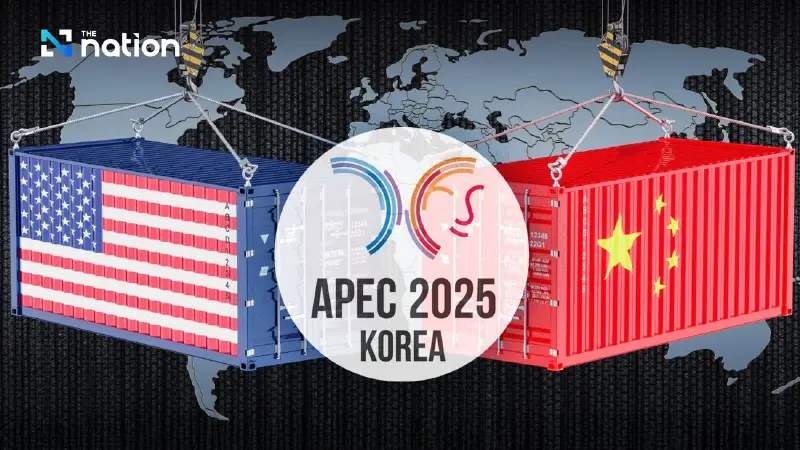


APEC leaders pledged to rebuild global trade resilience amid the US retreat and China’s bid to shape a new free-trade order at the Seoul summit.
- At the APEC summit, the U.S. signaled a retreat from its traditional leadership in global trade, reflected by President Trump's early departure and the final declaration's omission of terms like "multilateralism."
- China positioned itself as the new champion of free trade, with President Xi Jinping urging members to uphold open commerce and announcing China would host a future APEC summit to strengthen ties.
- The summit's tone and final declaration marked a "paradigm shift" in the global economic order, with observers noting the fading of WTO-based multilateralism amid growing geopolitical tensions.
Amid growing rifts in global commerce, Asia-Pacific leaders ended their annual summit on Saturday by adopting a declaration calling for more resilient, inclusive, and sustainable trade. The tone reflected a shifting balance of power, with China stepping into the role of free-trade advocate once occupied by the United States.
Hosted by South Korea, this year’s Asia-Pacific Economic Cooperation (APEC) summit took place against a backdrop of tariff battles, export controls, and widening geopolitical tensions that have shaken confidence in global markets.
Days before the gathering, US President Donald Trump announced fresh trade deals with several countries, including China and South Korea, before abruptly departing Seoul ahead of the main event. Although Washington’s influence lingered in the final communiqué, observers noted its notable omission of terms like “multilateralism” and references to the World Trade Organization, staples of past declarations.

“The language signals a recognition that the era of WTO-based multilateralism is fading,” said Heo Yoon, a trade expert at Sogang University in Seoul. “We are witnessing a paradigm shift in the global economic order.”
China seized the moment to cast itself as a stabilising force. In his closing address, President Xi Jinping urged members to uphold open trade and announced that China would host the next APEC summit in Shenzhen in 2026. Xi also proposed forming a World Artificial Intelligence Cooperation Organisation, underscoring Beijing’s growing influence in emerging technologies.
“Beijing is taking full advantage of Trump’s retreat to strengthen ties with countries unsettled by Washington’s unpredictability,” said Li Xing of the Guangdong Institute for International Strategies. “China’s message is that it seeks shared prosperity, not dominance.”

Analysts noted that while the declaration avoided framing the US as an obstacle to free trade, it hinted at the region’s cautious recalibration amid an increasingly fragmented global landscape. “No country truly believes a new trade system can succeed without the US,” Heo added.

Xi’s Seoul visit underlines delicate balance
President Xi concluded his three-day trip to South Korea with a state dinner hosted by President Lee Jae Myung, who came to power in June promising to recalibrate Seoul’s foreign policy between Beijing and Washington.
Lee faces a complex balancing act: protecting South Korea’s export-driven economy while managing security risks on the Korean peninsula. “It is hard to say that our relations with China have ever been fully normalised,” Lee said before his meeting with Xi. “We must now move beyond restoration and pursue genuine, mutually beneficial cooperation.”
Earlier in the week, Lee had also hosted Trump for a brief state visit, announcing a surprise deal to lower US tariffs in exchange for billions of dollars in South Korean investment.
North Korea looms over diplomacy
During the Xi–Lee summit, Seoul asked Beijing to support renewed engagement with Pyongyang, though Chinese reports avoided any mention of North Korea. Hours later, North Korea dismissed calls for denuclearisation as a “pipe dream,” reaffirming its defiance.
Trump had offered to meet North Korean leader Kim Jong Un during his stay in Seoul, but Pyongyang remained silent.
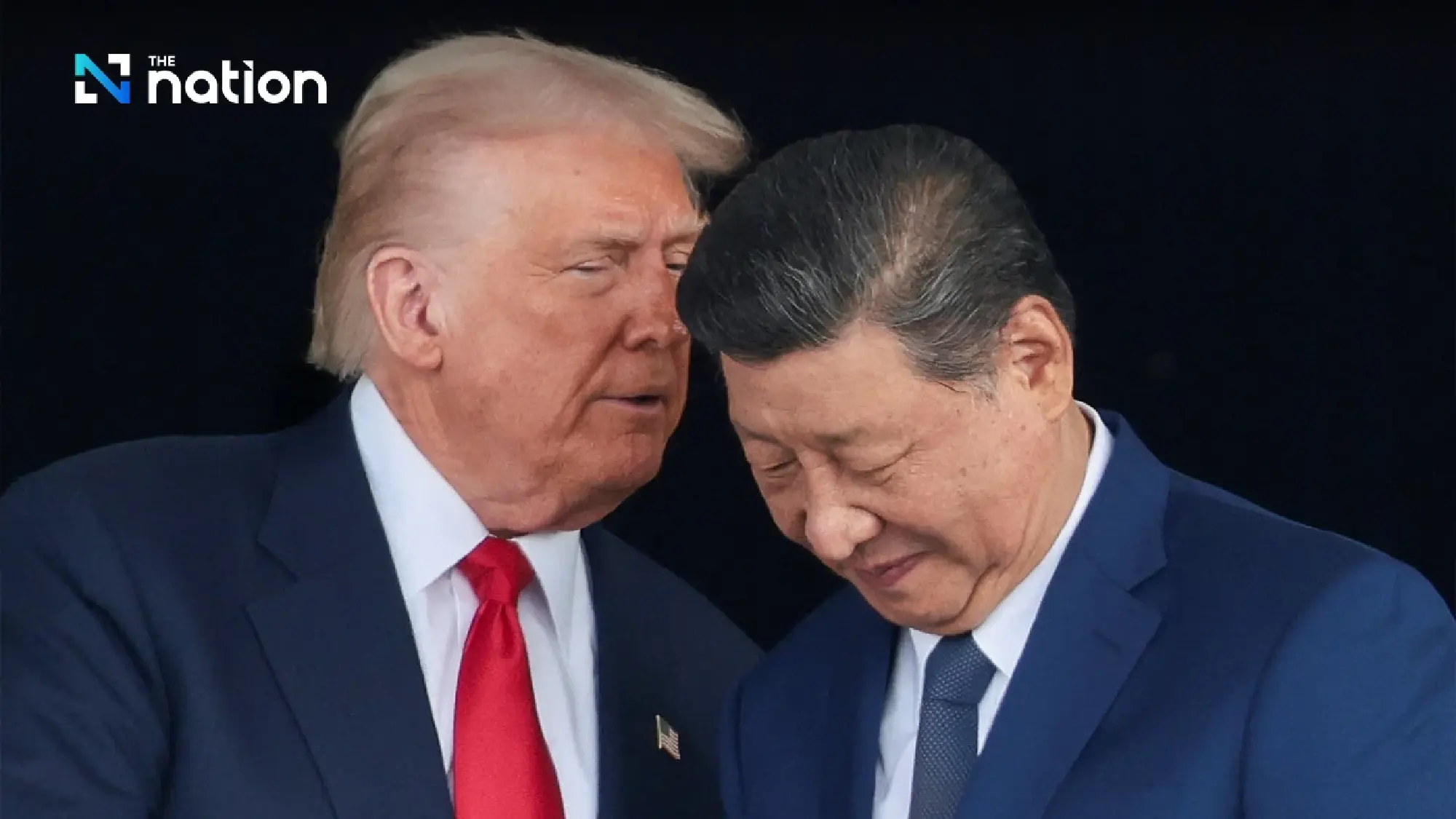
Before leaving Asia, Trump met Xi in a separate bilateral meeting, agreeing on lower tariffs for Chinese goods and cooperation to curb fentanyl trafficking, alongside commitments on rare-earth exports and agricultural trade. Xi also held bilateral discussions with leaders of Japan, Canada, and Thailand.
Taiwan’s envoy to APEC, Lin Hsin-i, said he met US Treasury Secretary Scott Bessent on the sidelines to discuss semiconductor supply chains — a sign that technology and trade remain the key battlegrounds shaping the new global order.
