
Inside the 14-point draft of the US-Iran peace deal
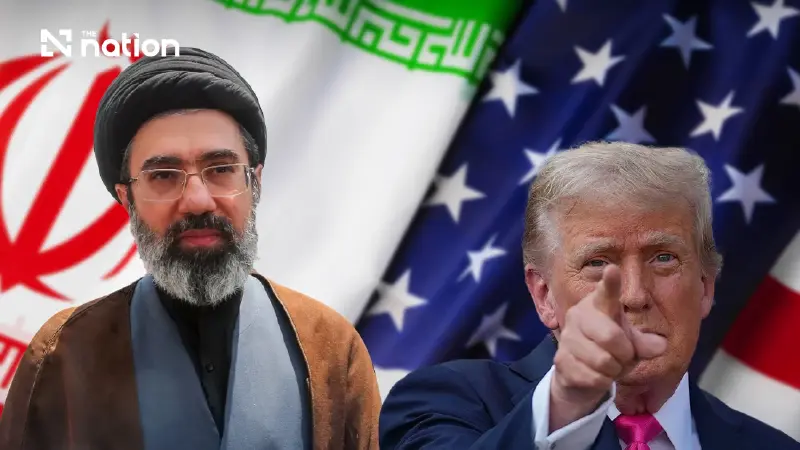


Competing drafts of a proposed US-Iran agreement have emerged, covering the reopening of the Strait of Hormuz, sanctions relief, frozen assets and future nuclear talks.
Amid reports that the United States and Iran are preparing to sign a peace agreement in Switzerland on Friday, June 19, 2026, to reopen the Strait of Hormuz, Iran has circulated a draft memorandum of understanding whose content differs from other reported versions.
The competing drafts have created confusion over how much the two sides have actually agreed, and which side stands to gain more from the proposed deal.
At least three drafts have been reported. They share several core elements, including the reopening of the Strait of Hormuz, sanctions relief for Iran and the opening of a path towards longer-term negotiations on Iran’s nuclear programme.
However, the details differ significantly, especially over the financial benefits Iran would receive in the short and long term. This is a politically sensitive issue for hardline groups in the United States, who are concerned that President Donald Trump may be conceding too much to Tehran.
Although all versions appear to agree in principle on reopening the Strait of Hormuz, easing oil sanctions and starting nuclear talks, the details vary.

One draft seen by Bloomberg said the United States and its regional partners would establish a reconstruction and economic development programme for Iran worth at least US$300 billion, or nearly 10 trillion baht, if a permanent agreement is reached in the future. Under that version, Iran’s nuclear programme would be handled in the next stage of negotiations.
By contrast, Reuters cited a senior Iranian official as saying that another draft memorandum would allow the United States to release US$25 billion, or around 800 billion baht, in frozen Iranian assets — a detail not included in the version seen by Bloomberg.

Iran’s semi-official Mehr news agency also reported that final negotiations would not begin until half of Iran’s frozen funds had been released, oil sanctions had been suspended and the naval blockade had been lifted.
The ambiguity reflects the difficult political challenge facing Trump, who wants to end the Iran war quickly while avoiding heavy criticism from US hawks who may accuse him of handing Tehran a major political victory.
A senior US official said the agreement would proceed step by step, with Iran receiving benefits only after meeting conditions set by the United States at each stage. Bloomberg reported that the sequence of steps would see Iran receive rewards as it met specific US demands.
The key question now is therefore not only whether a deal will be signed, but which version of the agreement the United States and Iran are actually prepared to endorse — and who will benefit most from ending the conflict.
Reuters reported that Trump wrote on Truth Social that the deal with Iran was complete, while Pakistani Prime Minister Shehbaz Sharif, whose country has acted as a mediator, said the agreement called for the immediate and permanent end of military operations on all fronts, including in Lebanon. Reuters also reported that Iran’s deputy foreign minister Kazem Gharibabadi said a broader agreement would be negotiated during a 60-day ceasefire period.

The latest Persian-language draft: 14 key points
1. Immediate and permanent end to the war
Iran and the United States, along with the allies of both sides in the conflict, would declare an immediate and permanent end to the war on all fronts, including in Lebanon, through the signing of the memorandum of understanding. Both sides would pledge not to start a war against each other again, and to refrain from threatening or using force against each other. The final agreement would confirm the permanent end of the war and all related provisions.
2. Respect for sovereignty
Iran and the United States would respect each other’s sovereignty and territorial integrity, and would not interfere in each other’s internal affairs.
3. Final agreement within 60 days
The two sides would begin negotiations and seek to reach a final agreement within 60 days. The timeframe could be extended if both parties agree.
4. End to the naval blockade
Immediately after the signing of the memorandum, the United States would begin lifting its naval blockade and restore shipping to full normal capacity within no more than 30 days. The United States would also commit to withdrawing its forces from the Persian Gulf region within 30 days after a final agreement is reached.
5. Reopening the Strait of Hormuz
Iran would immediately take steps to restore commercial shipping between the Persian Gulf and the Sea of Oman. It would increase shipping volumes to pre-war levels within 30 days, taking into account the need to remove technical obstacles and mines.
6. US$300bn programme to rebuild Iran’s economy
The United States and its regional partners would establish a reconstruction and economic development programme for Iran, with funding of at least US$300 billion, or nearly 10 trillion baht. The mechanism for the programme would be set out in the final agreement.
7. Lifting all sanctions on Iran
The United States would agree to terminate all forms of sanctions against Iran within a mutually agreed timeframe. These would include United Nations Security Council resolutions, International Atomic Energy Agency Board of Governors resolutions, and unilateral US primary and secondary sanctions, both direct and indirect.
8. Iran reaffirms it will not produce nuclear weapons
Iran would reaffirm that it will not produce nuclear weapons. The two sides would discuss the future of Iran’s uranium enrichment programme, its stockpile of enriched nuclear material and other nuclear issues, including Iran’s nuclear-energy needs. A cooperation framework would be included in the final agreement.
9. Status quo until final agreement
Until a final agreement is reached, Iran would maintain the current status of its nuclear programme, while the United States would not impose additional sanctions or increase its military forces in the region.
10. Permission for Iran to export oil
The United States would commit to issuing waivers through the US Treasury Department to allow the export of Iranian crude oil, petrochemical products and related derivatives. This would include all related services, such as financial transactions, insurance and transportation, immediately after the memorandum is signed and until sanctions are terminated.
11. Release of frozen Iranian funds and assets
The United States would gradually release and make fully usable Iran’s frozen funds and assets in line with progress towards the final agreement. The funds could be used to pay final beneficiaries designated by Iran’s central bank. The United States would issue all necessary licences and approvals to support the process.
12. Monitoring mechanism
Iran and the United States would jointly establish a mechanism to monitor and verify implementation of the final agreement.
13. Final negotiations after key measures begin
After the memorandum is signed, and once implementation of point 4 on ending the US blockade, point 5 on reopening the Strait of Hormuz, point 10 on allowing Iranian oil exports and point 11 on releasing frozen Iranian assets has begun, the two sides would start negotiations on the final agreement, focusing only on the remaining issues.
14. UN Security Council endorsement
The final agreement would be endorsed through a legally binding resolution of the United Nations Security Council.
